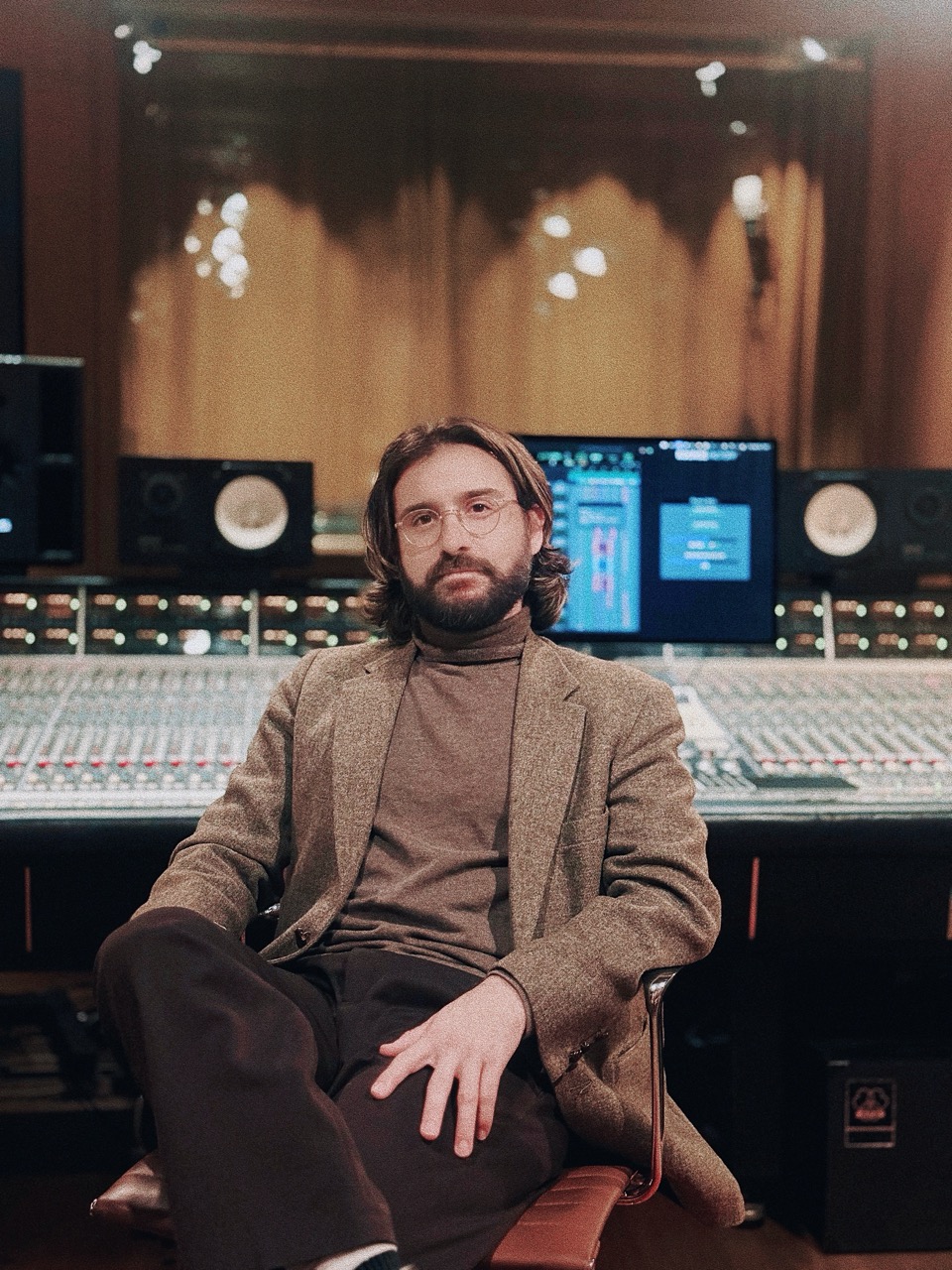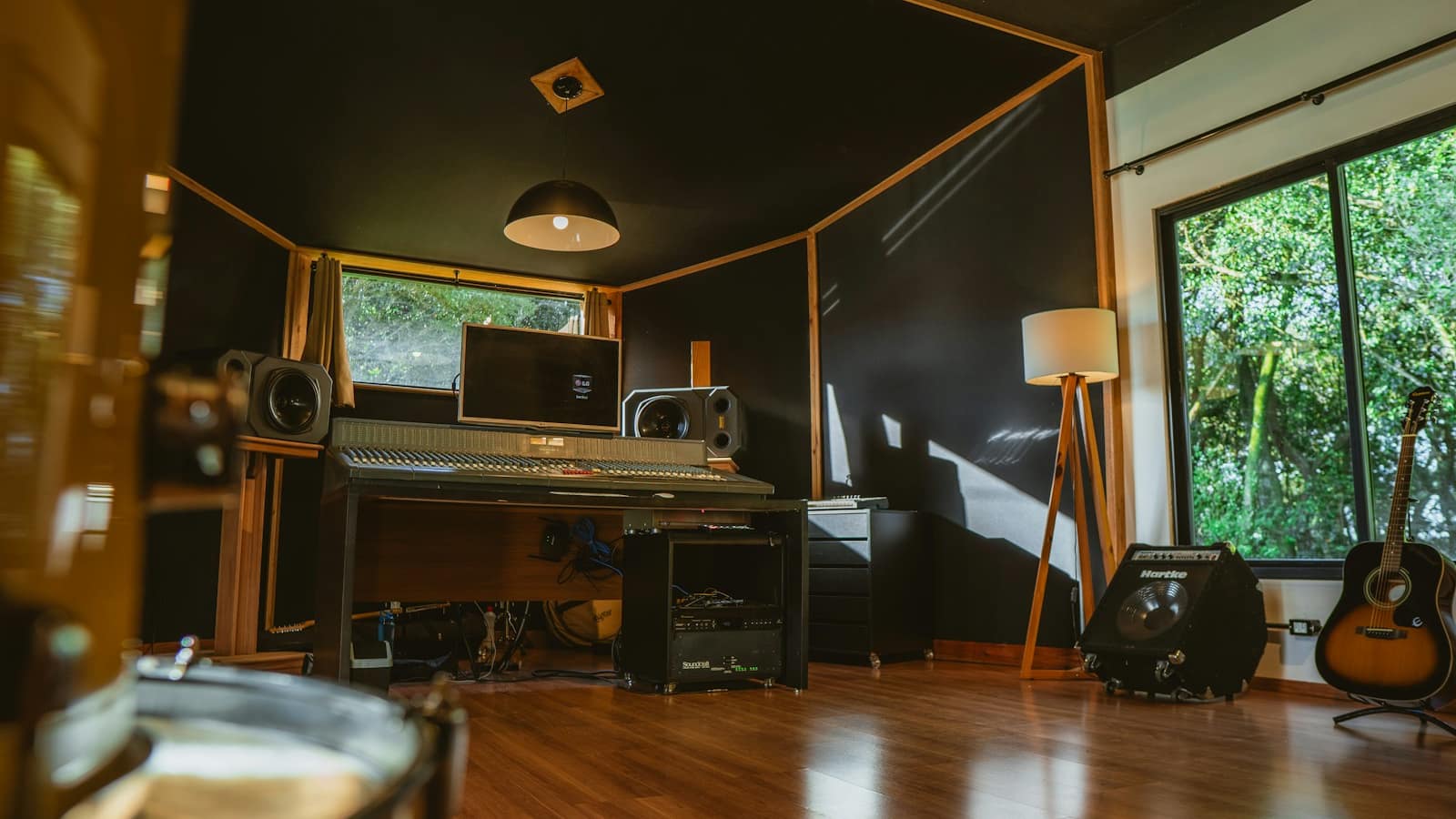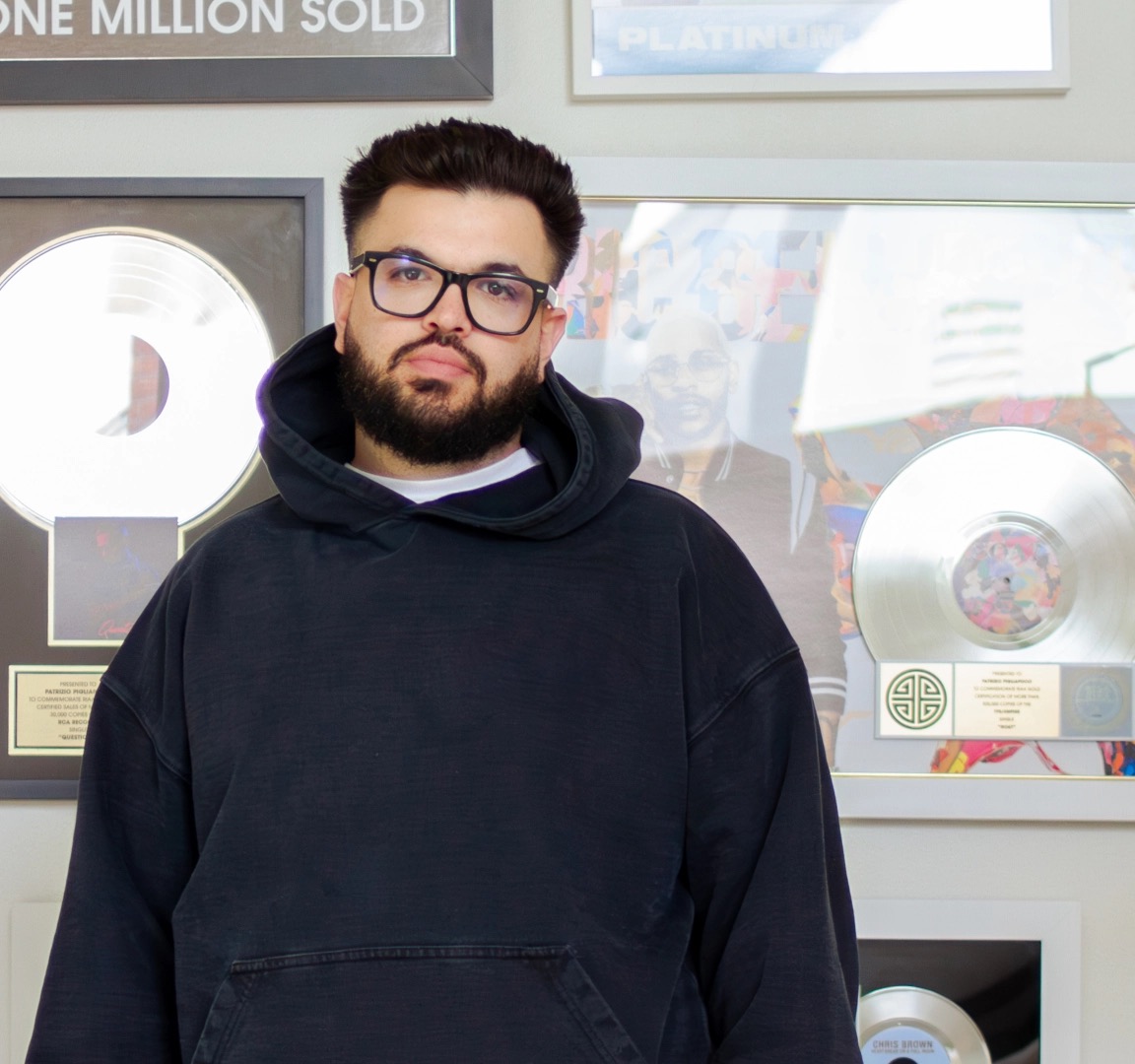
Teezio spent the better part of a decade as a recording engineer, most of it in the room with Chris Brown, before stepping out on his own as a full-time mix engineer. In that time, he mixed Jack Harlow's "First Class" and Lil Nas X's "Industry Baby," both number one records, while still clocking sessions as Chris's engineer. Today he works from his home studio in LA, mixing for a new generation of artists and building a brand that extends well beyond the console. I was grateful to sit down with him to discuss trust, workflow, relationships, longevity, and so much more.
What did you do early on that made artists notice you before they even met you? What made people say: "I want to work with that guy"?
I speak about this guy Lil Eddie a lot. He's a really amazing writer, but he was notoriously known for being ridiculously hard to work with as an engineer. He would just cuss engineers out left and right. So he'd bring me into sessions to avoid that problem. I was the engineer.
He'd bring me into a room full of people who had no idea who I was. You know how it is in the studio. People aren't always nice and saying hi to the engineer. "Oh, what's up, Eddie? Blah, blah," all this stuff. Nobody knew who I was. Then I'd sit down, Eddie would go in the booth, and as soon as they'd see how fast I started working, the keyboard would just be clicking so hard. That's what made them notice me.
Eddie wouldn't complain. And that was the thing, because he complained about everybody. So when people saw me moving that fast and Eddie not cussing me out, they were like, "Yo, this guy is the fucking man." I didn't even have to say anything. I would just walk in the room, sit down, pull up my session, and when they saw the work happen, that's when everyone's heads turned.
After those sessions, producers and studio managers would come up to Eddie like, "Can we get his number? Is it cool if we use him for some other stuff?" Eddie was always like, "Yeah, for sure, as long as he can work when I need him to work." That was the key in.
When you're in a room with a big artist for the first time, what do you do intentionally in the first 10 minutes to earn trust?
I like to have a conversation with them about how they like things. "You want some tune? Do you want some reverb? Do you want some delay?" Asking those questions makes them feel like you're interested in providing a service that goes beyond just sitting down and being like, "Get with what I'm doing or get out." You're coming to them with humility: What can I do to make this recording process for you fast, easy, simple, flowing? When you ask them those things, it kind of perks their ears. Like, "Oh, you care."
With Chris, the first thing that earned his trust was when he walked in the room for the first time meeting me, I had the song up because the label had let me know what he was going to cut. I was like, "I got the song up. You ready to jump in the booth?" That meant the mic was up, headphones were working. We'd tested everything. Everything was ready. That was kind of like, "Oh, I can rely on you." He could walk in the room and not have to ask, "Why isn't anything working yet?"
How did you decide which low-pay or free sessions were worth doing for the long game and which ones weren't worth your time?
I did a lot of sessions for writers for free in the beginning as I was coming up. The reason I did that was because I knew how much attention I would get as a recording engineer when people would see me work. All those sessions for Lil Eddie? Free. Every now and then he'd be like, "Okay, they're going to pay me extra, so here's three hundred bucks," but for the most part, he knew I was getting the work from people seeing me. That was literally how I was able to get on in the beginning.
But it's also about reading the room in the music business. If you know someone is talented, if you know someone is on their way up and they've been having a lot of micro-successes and slowly building, that's worth it. Sometimes you want to get your foot in the door with someone in the camp. An A&R might say, "Hey, can you mix these smaller artists, and then we'll see how it goes?" They're going to put you through on the smaller stuff first, and then once you prove yourself, they'll try you on the big stuff.
I've had A&Rs come to me like, "Hey, we had a record mixed. It was supposed to be delivered last Friday. The artist hates the mix. Can you please do this? We don't have that much money." And I always say, "Of course," because that A&R also has other artists on their roster, will sign more artists, and the artist I'm mixing for may be here today and gone tomorrow. So for me, it's establishing with the business people at the same time as the artists.
What were the one or two decisions early in your career that actually moved you up from "talented" to "in-demand"?
I sacrificed everything. From eighteen years old up until I got to Chris, I slept, ate, breathed, shit Pro Tools for basically eight years. I would wake up and it's like, "What sessions can I go to?" I'd finish a session and be like, "Where am I going next?" This was all without social media. Just hitting people up: "Hey, I just finished my session. What are you up to?" "Oh, we're actually gonna have a session later tonight at ten. Do you wanna engineer it?" Boom, boom, boom.
I didn't drink alcohol. I smoked weed, and that's all I did. I didn't party. I only went out to further my network. When I was going out, I wasn't going out to get drunk and fucked up. I was actually going out to see who I could meet.
And speed made me really in demand. Writers coming up were vicious. Absolute psychopaths in the booth. They'd been working with Darkchild, Dr. Luke, all these people with major recording engineers. When those writers went to other studios, they had that demeanor about them. So when people started seeing how fast I was at recording, they were like, "We want this guy because I don't want to be writing a song and have to deal with an engineer that's incompetent and doesn't know how to punch correctly or stack correctly or blend things as he's going."
But I always tell people this: you could be the best engineer, but if no one likes you because you're not the most pleasant person to be around, they will work with a less talented engineer just to not have their vibe fucked with.
What parts of your session workflow or organization do artists comment on that younger engineers overlook, but matter the most for getting callbacks?
The biggest thing that's overlooked is templates. People are so set on templates being about sound, when the sound really changes from artist to artist. Yeah, you're gonna have an EQ, a compressor, a de-esser, but those things will have different settings for every single artist you work with. The only thing that won't change is your operational order, your color coding, your organization. So when we talk templates, we're mostly talking about how fluid and how quickly you can move without the artist cussing you out. Let's just leave it as basic as that.
Everything had a specific color that I always used. I could scroll up and down my entire session and immediately know exactly where I was at all times with the markers. Even with the regions, I would cut them so they were all perfect. Every hook, when you scrolled down, you'd immediately know: that's the hook, that's the hook four-stack, that's the hook lead. Because everything was cut exactly the same for every fly. That gave me visual cues throughout my sessions while I was recording.
And when you're recording, it's not like mixing. When I'm mixing, I'm on a yacht, hanging out on a lake. But when you're recording, you're on one of those stand-up jet skis in the ocean and at any moment you can fly off of it. You have to be so fast and so fluid.
There's little things too, like how I make the clean version. I have the main version, then I fly the entire song to the right, set a marker: "This is the clean." So when the artist says, "Hey, turn up my lead," I turn up the entire lead for both the dirty and the clean at the same time. They might think, "Make sure you do it on the clean too," and it's like, no, anytime I do anything, it does it to both.
As your career grew, what systems or habits helped you handle more work without burning out or lowering your quality?
Main thing was Google Calendar. My whole life is set into time blocks. I have a mix tomorrow, and it's gonna take me roughly two hours. If it takes one hour, if it takes three hours, I'll change the size of the box in real time. But the blocks allow me to allocate time for everything I need to do. I know where my time needs to be spent in the studio and where my time can be spent doing other things. If someone hits me with "Hey, can you do this?" and I'm not home, I'll have my assistant put it in the calendar so I don't forget.
Having an assistant was huge. When I first started mixing full-time, I would have to set up my own songs, which could take an hour on a two-hundred-track session. Putting it in the template, routing, color coding, cleaning up. Having an assistant to do all that means I can sit down, focus on the mix, do the notes with the artist, and then the assistant steps back in to deliver, set up the Atmos, make the cleans.
And honestly, not mixing slow. I feel like a lot of people, when they first start mixing, they're proud to be like, "It took me eight hours to mix this song. I dialed the snare in for two hours." I think people need to stop doing that. You're matching the demo. You're making the demo sound better. You're cleaning up stuff. Especially today, where artists just want it to sound like the demo.
Ear breaks are super important too. It's great to go on TikTok for five minutes. You come back to the mix and you're like, "Wow, there's too much mid-range." I was sitting there for fifteen minutes straight blasting it, and now that my ears have relaxed, I can actually hear it.
How do you read an artist's energy and adjust your approach so the session flows, especially when personalities or pressure run high?
This has nothing to do with engineering. It's like when you walk into a church. If everyone's praising, it's fine to go in there and praise. But if everyone's silent because there's a funeral, you don't go in there laughing and having a good time.
I'm always gonna assimilate to whatever the energy is. If I walk in and everyone's laughing and having a good time and telling jokes, it's "What's up? Blah, blah, blah. Oh, we're going to the studio? Cool." But if I walk in and everyone's silent, maybe on their phones, really quiet, I'm not gonna be like, "Hey, how's everyone doing?" I walk in: "What's up? What's up?" Very quiet, very just... I'm right in the same energy, as if whatever happened to them also happened to me.
You have to literally mimic the energy. That's extremely important. And it's not something you can teach someone. You can't just say, here's how you know what the energy is. It's something you feel. That feeling is learned through being an engineer, working with writers and producers, understanding the feeling of music. That's actually allowed me to transfer that talent to understanding feeling in the material and physical world.
What's your philosophy on staying on people's radar and building real relationships without coming off transactional?
Everything in this space will start out as transactional. The goal is to try to turn it into an actual friendship, where you connect on a different level. Because when something is purely transactional, that means they meet Manny Marroquin tomorrow and they're like, "Oh, I want to use Manny now." There was no bond built beyond the transaction.
It gets easier as you become bigger. In the beginning, things tend to feel more transactional. But as you grow, it's like, "Of course you should know who this person is. Of course we should link."
And I'll be honest, a lot of it has to do with social media. There are mixers I can literally name who are big mixers but are not on social media at all, and they've kind of fallen to the side. Something that really benefited me was being heavy on interviews, breakdowns, all of it, to the point where even if people haven't had me mix a record, they know of me. They know my name.
I have a friend who has an assistant and doesn't like to get any credit on anything. He just wants to be there for the money, has his family. He will never become a big mixer because he hates social media. We live in LA. It's kind of like: you get jiggy with it or you get out. You don't have to do the trends. It's just about observing, seeing, taking it in.
What's one moment where you took a scary leap, one you almost didn't take, that ended up changing everything for you?
Leaving Chris. I mixed First Class and Industry Baby, both number one records, and I was still working for Chris. The decision came when I felt that there was too much mixing to do and I didn't have time to sleep and be ready to give Chris a hundred percent, then come home at five in the morning and deal with labels at eight.
It's really hard to go from a fully secured job where you're getting guaranteed money every month. And as a recording engineer, you go way more places, you meet way more people. Bainz with Future, Flo with Gunna, they're on a first-name basis with all these big artists just because they're in the room. Those were positives I had going.
But it was time. Chris had left on tour to do Breezy's album, and I told him: "Hey, I'm gonna be mixing full-time now. I have a guy, JP, that I'm gonna put in place." And that was basically history. You go from a guaranteed job to just being like, "Okay, I'm here to mix records. Hopefully I'm making enough money to survive." I think it turned out okay. We're still here.
What are you doing now to protect your ears, your mental health, and your relevance so you can still mix at a high level 10–20 years from now?
Everyone knows me. I'm the weirdo. I always wear earplugs. Concerts, games, anywhere above seventy-five, eighty decibels. Even in the car when I roll down the window, because that wind noise really fucks with my ears.
Mental health, having the studio in my house has been everything. I have the hot tub, the backyard, the house is decorated beautifully. Everything gives me inspiration and makes me feel like, "Let's get another work day in." I'm going to the gym almost every day. Bainz got me really into the health kick. I'm eating cleaner, making food at home. Being in my own controlled environment instead of gross recording studios with bad equipment and shitty situations has been so helpful.
Relevance is staying young and being around young people. I'm thirty-five years old, and every single artist I'm working with these days is younger than me. It used to be the opposite. I was the eighteen-year-old engineer, the youngest in the room. So I'm on TikTok. I know so much dumb shit I probably don't even need to know about the younger generation, but it matters. Understanding the culture. You don't have to do the trends. It's just about observing and taking it in.
And on the music side, it's the same thing. Like right now, everything's blown out and distorted. There's an artist I'm working with, Young Martyr, and some of the songs are blown out on purpose, so I'm literally blowing stuff out against clippers to get that sound but with more control. That's me adapting, doing everything against what I usually go for.
Long-term, I think it'd be great to move into the plugin space, which I'm already doing with a company called Naturl Audio. We have a limiter called AL1. And maybe getting into the label side at some point, becoming an executive when I'm older. I'll be fifty-five in twenty years. We'll see what happens.
If this is the part of the business that feels stuck, the Mentorship Intensive is sixty minutes of looking at your specific situation and mapping out what to do next.
Want a self-serve diagnostic first? The Business Reality Check grades twelve systems in your business and shows you where the real bottleneck is sitting.